
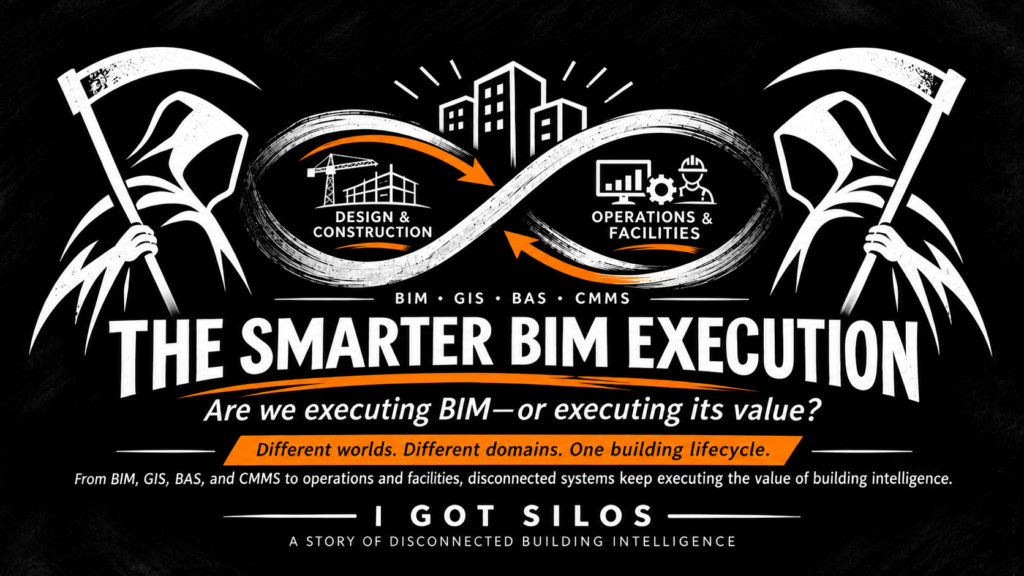
Stop wasting energy. Stop losing knowledge. Protect the value of buildings.
Two BIM executioners appeared for Halloween: one from design and construction, the other from building automation, operations, and facilities management. Different domains, same building lifecycle. Both risk executing the value of the intelligence their systems create.
The challenge is to preserve building knowledge across disciplines, systems, handovers, and decades of operations.
Explore the visual story: [I GOT SILOS — Seven Days to Smarter Buildings]
From buildingSMART Tokyo to Greenbuild New York and live building demonstrations: Show us the data. Show us the money. Show us it works.
Greenbuild 2026 highlighted energy efficiency, financial value, and measurable performance. Yet measuring a building is not the same as understanding what to improve.
Design knowledge and operational intelligence must remain connected for owners to capture lasting value.
AI should face the same test as any investment: Can it save more energy, resources, and money than it costs?
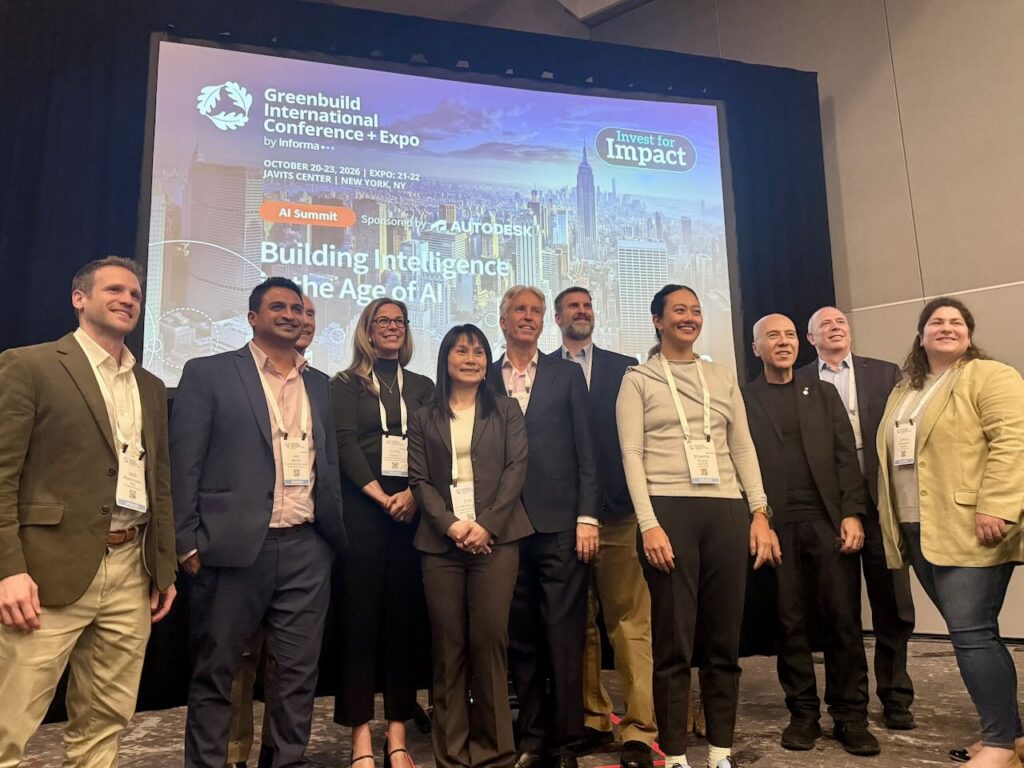
Greenbuild 2026 AI Summit, New York — Presenters and participants from USGBC, major building owners, buildingSMART, C4SB, and ALN exploring AI, sustainability, and building intelligence.
1. We Spend Millions Making Buildings Smart. Then We Throw Away Their Intelligence.
The knowledge we lose is an asset we already paid for.
We measure energy, water, carbon, and waste. Why not the lifecycle value of building intelligence?
Equipment identities, engineering relationships, commissioning knowledge, and operating history often disappear during handovers and software changes. Owners pay to recreate information they already funded.
Worse, the next repair, renovation, or capital decision loses the benefit of what was previously learned.
As Penn State noted at Greenbuild, structured facility information should create value well beyond the initial handover. Knowledge that survives a platform change is a financial asset.
Explore: Intelligence: The Forgotten Sustainable Material.
2. LEED v5: Less Paperwork. More Proof. More Value.
Collect evidence once. Connect it. Reuse it.
Greenbuild speakers described too many spreadsheets and repeated evidence collection. LEED v5 and USGBC’s Arc platform are advancing how performance data is organized and reused.
Connect that evidence to equipment, spaces, operating conditions, and maintenance history, and owners can preserve a verifiable record of what changed and why.
We converted LEED v5 spreadsheet information into a building-linked knowledge graph. This was not an integration or certification result, but it demonstrated the potential for reusable evidence.
Trusted evidence could remain in connected systems, complete with sources and timestamps, rather than being recreated for each report.
Less paperwork is useful. Reusable, verifiable intelligence is more valuable.
Explore:
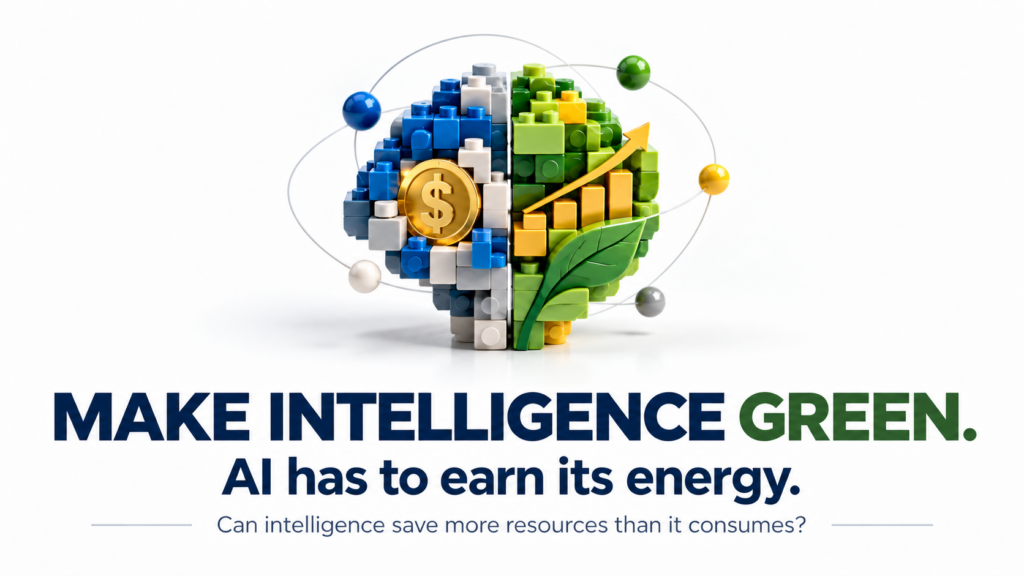
3. AI Has to Earn Its Energy, and It Keeps
Good for the Bottom Line (and the Planet)
AI consumes electricity, water, computing resources, and money. Its building benefits must justify those costs.
In our Become the Building exercise, owners asked about comfort, equipment failures, energy, risk, and even a facility’s 40-year cost. No single meter, BIM file, or chatbot can answer everything.
At Greenbuild, only one person stood when I asked who trusted AI to control a building. More than half stood when I asked who wanted a human in the loop.
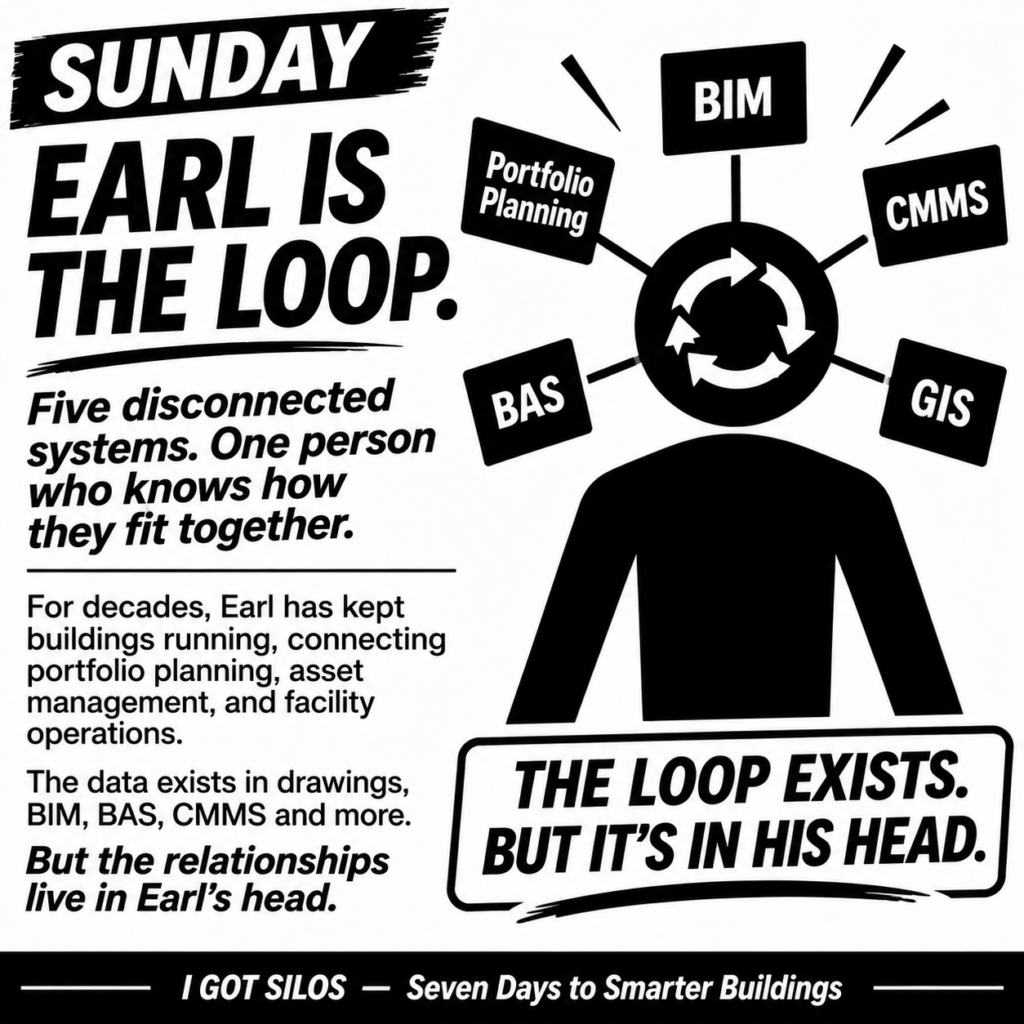
But what if that human is Earl?
Some of you may remember Earl from nearly two decades of BIM standards and COBie discussions, championed by Bill East. Earl represents the veteran facility manager who has kept disconnected systems running through decades of experience. Earl is the loop. When he retires, much of that knowledge disappears. Neither people nor AI can reliably reconstruct relationships that were never captured.
Semantic models can preserve those identities and relationships. Targeted queries and calculations can answer some questions without repeatedly processing raw data through AI, leaving AI to focus on exceptions, explanations, and decisions.
The next test is measurable: compare answer quality, traceability, response time, computing cost, and energy consumed. We’re already applying semantic connections to real building information. Now we need to demonstrate their efficiency and value.
Explore: Become the Building: Live knowledge graph and participant questions.
4. Stop Buying Another Silo. Bridge What You Already Have.
One platform is not the same as interoperability.
At Greenbuild, I heard a recurring prescription: “Too many silos. We need one platform.”
During Schneider Electric’s session, I asked what happens when an owner changes platforms. Can the building’s intelligence move without losing meaning?
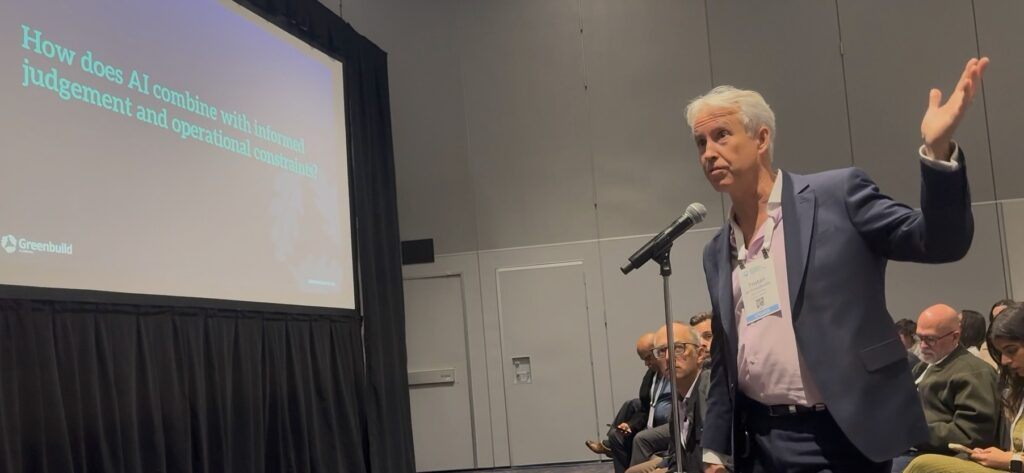
Tristan of SkyCentrics raises a question during Schneider Electric’s Greenbuild session, continuing the discussion about connected building systems and interoperability.
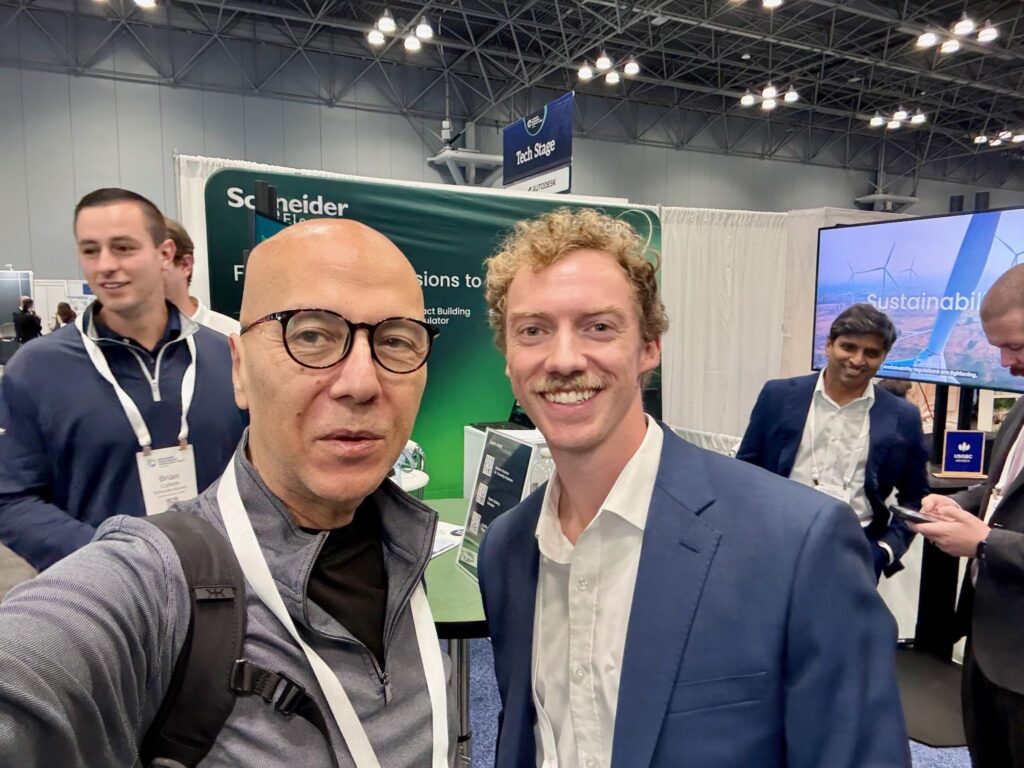
Continuing the interoperability discussion with Schneider Electric’s technical team at Greenbuild 2026, exploring semantic models, open APIs, and connections across existing building systems. I appreciated the technical team’s openness.
One place to access intelligence is useful. One vendor owning it all is not required.
Buildings are systems of systems. Our award-recognized Semantic Bridge links BIM, controls, maintenance, and other applications without forcing owners to replace them.
Owners should ask:
“Can the systems we’ve already paid for work together, and can our intelligence move between them without losing its identity and meaning?”
Centralizing data can simplify access, but it doesn’t automatically preserve interoperability, meaning, or the freedom to change systems.
Avoid creating a bigger silo in the name of sustainability.
Explore: Semantic Bridge technical paper and buildingSMART International recognition.
5. Owners Are Asking for Answers. Vendors, Can You Show the Value?
From energy efficiency to intelligent operations and measurable value.
Greenbuild closed with a packed session featuring Josh Cabot, Clark Brockman, and Karina Hershberg, challenging us to think beyond simply using less energy.
Buildings need to be low, flat, and flexible: reduce total consumption, manage demand peaks, and shift energy use when needed.
That requires connected controls, storage, operational intelligence, and grid information—not another isolated dashboard.

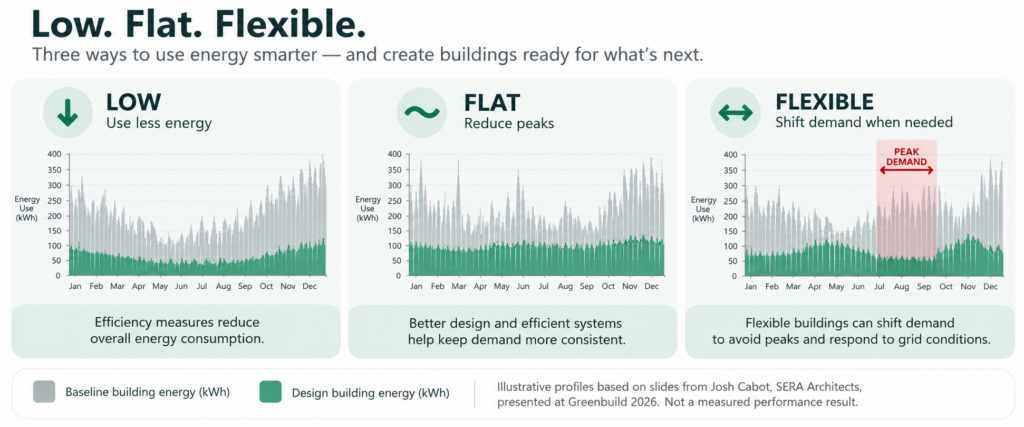
Low, Flat, Flexible: Graphic interpretation of concepts presented by Clark Brockman, Karina Hershberg, and Josh Cabot at Greenbuild 2026. Energy profiles adapted from Josh Cabot’s presentation and simplified by ONUMA for illustration; not measured performance results.
At the PAE Living Building, operational analysis exposed unexpected behavior and a battery-related demand charge that annual totals could miss.
Can those findings survive the next handover, so the next facility manager verifies savings instead of starting over?
With PAE data, we connect lightweight BIM, semantic models, and operational information across existing systems to make findings traceable and reusable.
Real value means preserving savings intelligence so each decision builds on the last.
Explore: PAE Living Building · RE1 sandbox · Interoperability demonstrations
6. Become the Building: Bring Your Building. Bring Your Vendors.
Your systems. Your data. Let’s prove what works.
Greenbuild was one milestone in ongoing work with real buildings, owners, and technology partners.
November 5 — What Did the Building Learn? Greenbuild Lessons and Next Missions
Join our Asset Leadership Network (ALN) webinar as we revisit lessons from Greenbuild and explore the next steps for building intelligence.
Register for the November 5 ALN webinar
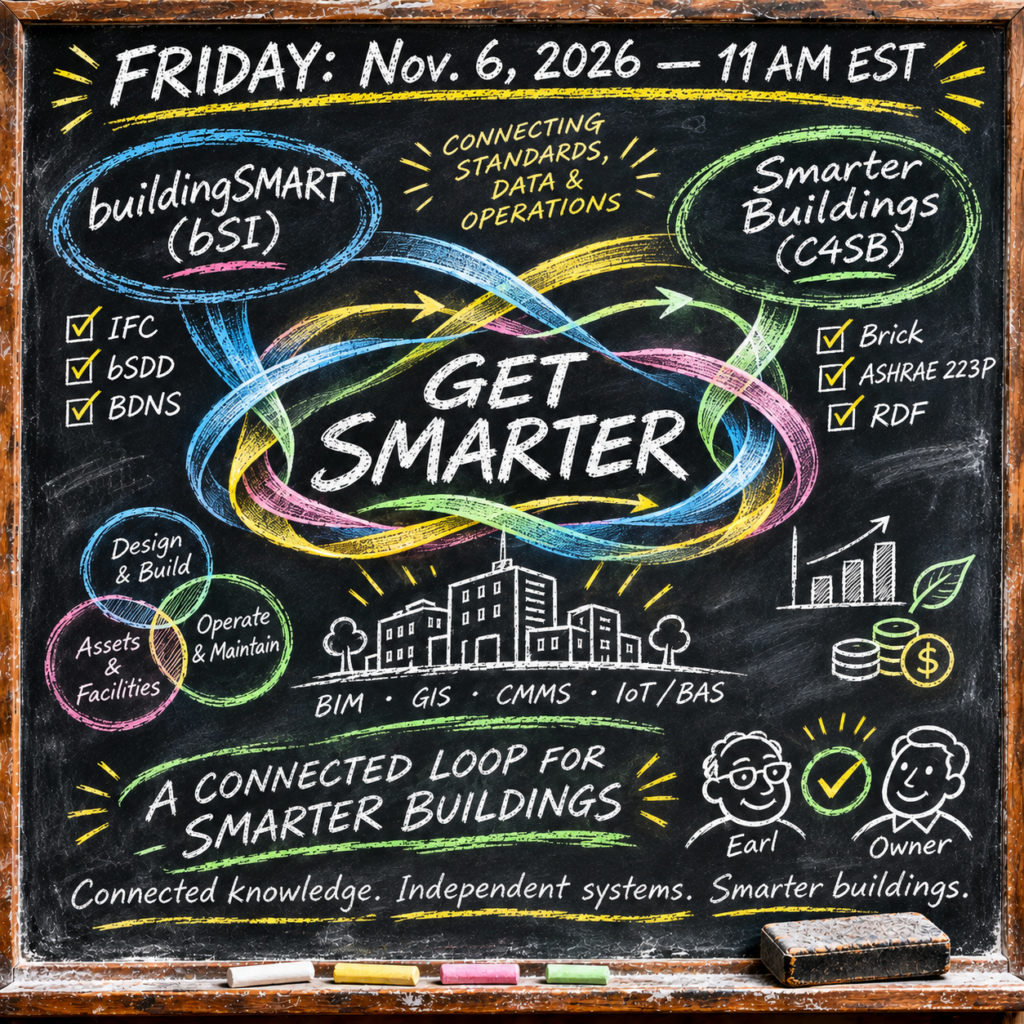
November 6 — Connecting BIM and Smart Buildings
buildingSMART International and C4SB Semantic Buildings come together to explore open standards, semantic relationships, and real building implementations.
Have a working solution, test model, or building data you’d like to contribute to interoperability testing? Message me on LinkedIn for an invitation to the November 6 working session.
The future isn’t one more platform. It’s connected intelligence that survives handovers, serves people and machines, and keeps delivering value throughout the building lifecycle.
Stop executing building intelligence. Start executing on its value.
That’s smarter BIM execution.
That’s how we build smarter buildings.