Maximize Your AEC Firm’s Value in an M&A
If you are a Controls, Mechanical, BAS, A/V, or MEP engineering firm that’s been doing well at all – chances are you have been curious

If you are a Controls, Mechanical, BAS, A/V, or MEP engineering firm that’s been doing well at all – chances are you have been curious

As the demand for smarter, more flexible building systems grows, wireless technology is playing an increasingly critical role in the future of Building Automation Systems

This week on Monday Live, exploring the future of smarter buildings. we delved into the fascinating theme of OEM disruption, specifically focusing on how smart,

By Tracy Markie, Chairman, LonMark International The recent announcement by Renesas to discontinue the remaining Neuron® chip family has raised understandable questions across the LonWorks®
After more than three decades in the building automation industry, I’ve learned that real progress happens at the intersection of innovation, openness, and practical application.

On the banks of the Savannah River with UAPs heading to Realcomm (not AI-generated, I saw them with my own eyes!) ONE Cargo Ship from
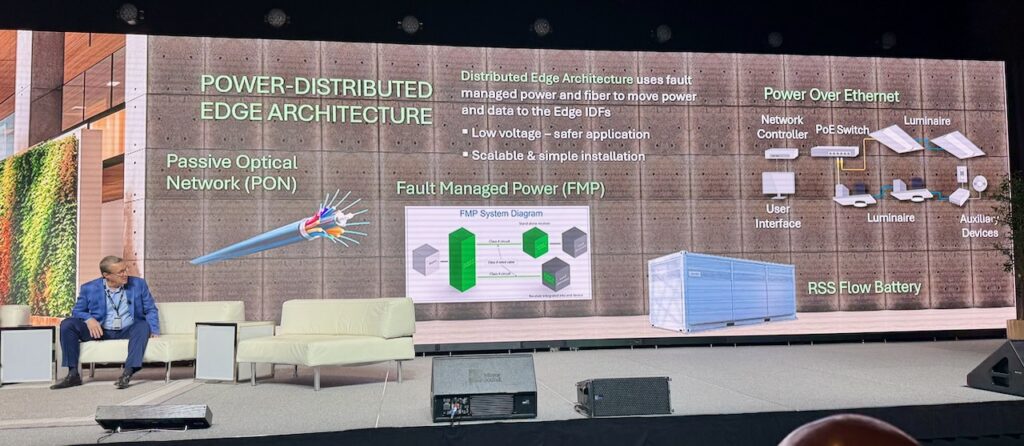
It was inspiring to witness Brett Hitt’s Realcomm 2025 presentation, described by Jim Young as “one of the best presentations in 25 years of Realcomm.”
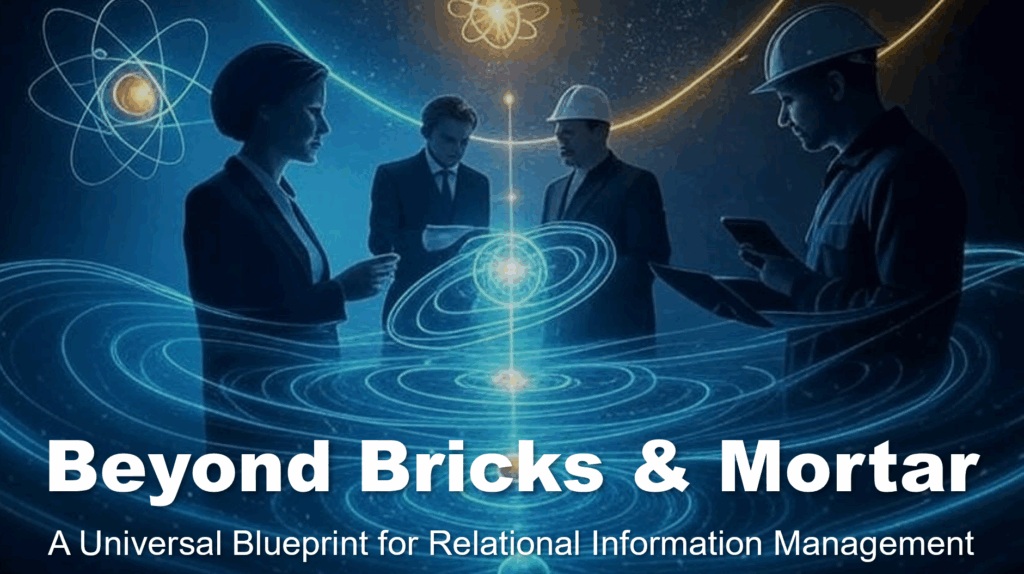
A Universal Blueprint for Relational Information Management 🔊 Listen to an audio discussion on this content generated by NotebookLM From the study in particles in atoms
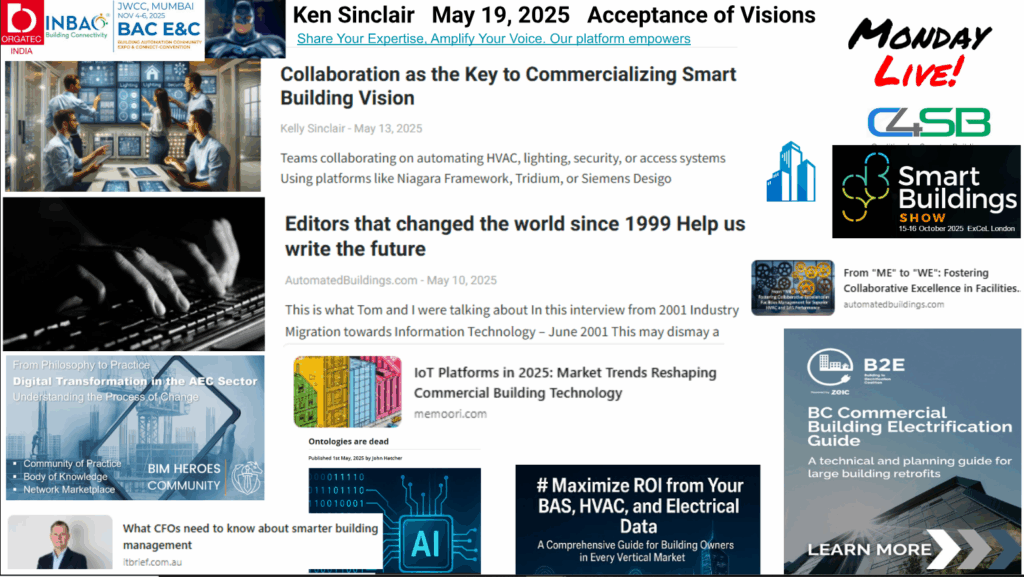
AutomatedBuildings.com, Mondaylive.org, May 19 slide with Links https://lnkd.in/ggwcQMYj We explore our Visions. Please thank all our sponsors for allowing us to provide you with this

1. Why Technical Fluency Matters for Leaders In modern facilities, Heating, Ventilation, and Air-Conditioning (HVAC) equipment and the Building Automation Systems (BAS) that orchestrate it
If you are a Controls, Mechanical, BAS, A/V, or MEP engineering firm that’s been doing well at all – chances are you have been curious
As the demand for smarter, more flexible building systems grows, wireless technology is playing an increasingly critical role in the future of Building Automation Systems
This week on Monday Live, exploring the future of smarter buildings. we delved into the fascinating theme of OEM disruption, specifically focusing on how smart,
By Tracy Markie, Chairman, LonMark International The recent announcement by Renesas to discontinue the remaining Neuron® chip family has raised understandable questions across the LonWorks®
After more than three decades in the building automation industry, I’ve learned that real progress happens at the intersection of innovation, openness, and practical application.
On the banks of the Savannah River with UAPs heading to Realcomm (not AI-generated, I saw them with my own eyes!) ONE Cargo Ship from
It was inspiring to witness Brett Hitt’s Realcomm 2025 presentation, described by Jim Young as “one of the best presentations in 25 years of Realcomm.”
A Universal Blueprint for Relational Information Management 🔊 Listen to an audio discussion on this content generated by NotebookLM From the study in particles in atoms
AutomatedBuildings.com, Mondaylive.org, May 19 slide with Links https://lnkd.in/ggwcQMYj We explore our Visions. Please thank all our sponsors for allowing us to provide you with this
1. Why Technical Fluency Matters for Leaders In modern facilities, Heating, Ventilation, and Air-Conditioning (HVAC) equipment and the Building Automation Systems (BAS) that orchestrate it