
Alarm Fatigue Is Killing Predictive Maintenance Before It Proves Itself
I watched a controls technician silence forty-one alerts in under three minutes once, without reading a single one. Not because he was lazy. Because the
Home » Fault Detection and Diagnostics
I watched a controls technician silence forty-one alerts in under three minutes once, without reading a single one. Not because he was lazy. Because the

Commercial building AI has invested heavily in teaching buildings to detect and analyze, but it has been slower to teach them what to do next.

Building maintenance can be a complex and time-consuming task, especially when it comes to identifying and diagnosing issues in HVAC, lighting, and other systems. However, there is a solution that can simplify and streamline the process: ASHRAE Guideline 36 Fault Detection and Diagnostics (FDD). This powerful tool leverages data analytics to identify and diagnose issues in a building’s systems, resulting in increased energy efficiency, reduced maintenance costs, improved occupant comfort, and increased equipment lifespan. In this article, we’ll explore the numerous benefits of implementing ASHRAE Guideline 36 FDD and how it can revolutionize building maintenance.
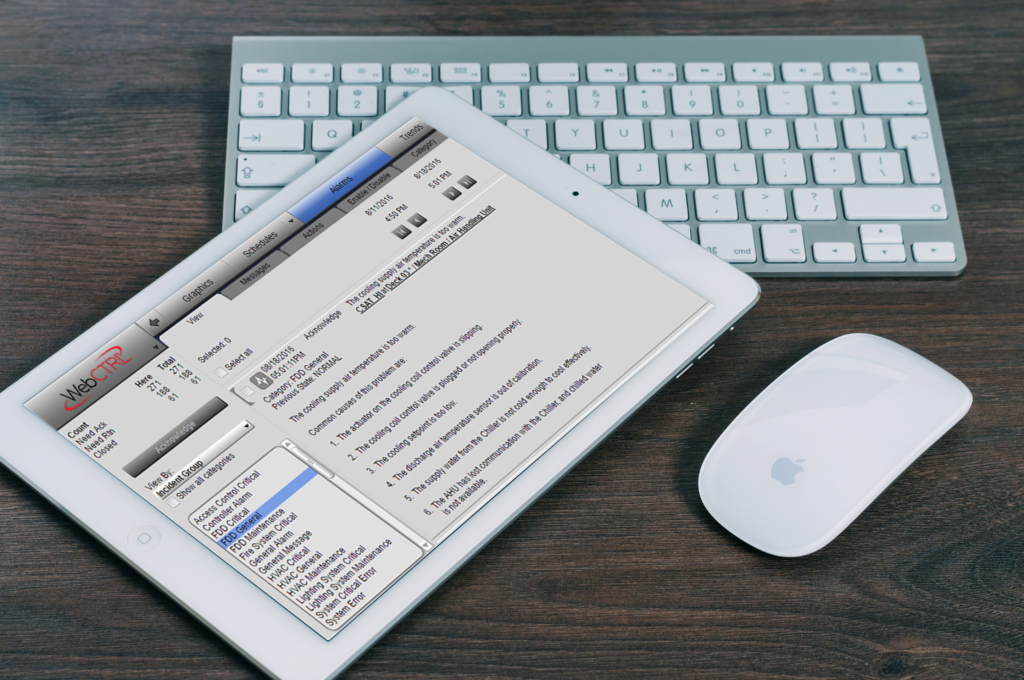

In conclusion, ASHRAE Guideline 36 and FDD systems are valuable tools for building owners and operators. Implementing these systems can bring numerous benefits, such as improving energy efficiency, increasing equipment lifespan, enhancing occupant comfort and indoor air quality, improving building performance, reducing maintenance costs, complying with building codes and standards, and increasing occupant satisfaction.
I watched a controls technician silence forty-one alerts in under three minutes once, without reading a single one. Not because he was lazy. Because the

Commercial building AI has invested heavily in teaching buildings to detect and analyze, but it has been slower to teach them what to do next.

Building maintenance can be a complex and time-consuming task, especially when it comes to identifying and diagnosing issues in HVAC, lighting, and other systems. However, there is a solution that can simplify and streamline the process: ASHRAE Guideline 36 Fault Detection and Diagnostics (FDD). This powerful tool leverages data analytics to identify and diagnose issues in a building’s systems, resulting in increased energy efficiency, reduced maintenance costs, improved occupant comfort, and increased equipment lifespan. In this article, we’ll explore the numerous benefits of implementing ASHRAE Guideline 36 FDD and how it can revolutionize building maintenance.

In conclusion, ASHRAE Guideline 36 and FDD systems are valuable tools for building owners and operators. Implementing these systems can bring numerous benefits, such as improving energy efficiency, increasing equipment lifespan, enhancing occupant comfort and indoor air quality, improving building performance, reducing maintenance costs, complying with building codes and standards, and increasing occupant satisfaction.