
Conceiving Concepts – Connection Profiles, Cloud Native & IBB
If you, like me, are having trouble understanding some of these new terms, here is a cheat sheet to help you catch up, with links

If you, like me, are having trouble understanding some of these new terms, here is a cheat sheet to help you catch up, with links
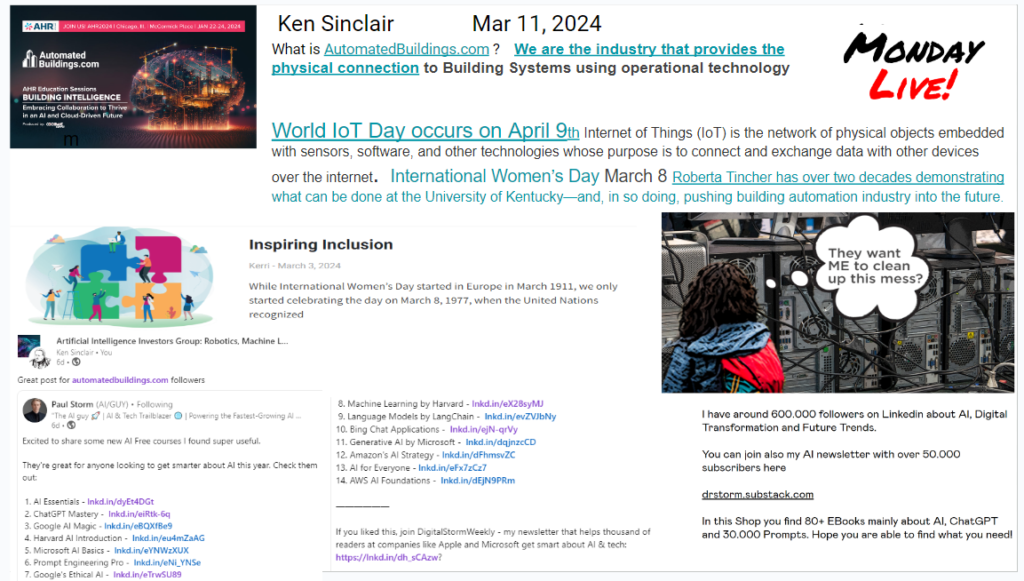
I start the discussion with this video clip below. Click on link below IoT will evolve quickly into Cloud Native and then evolve into AI
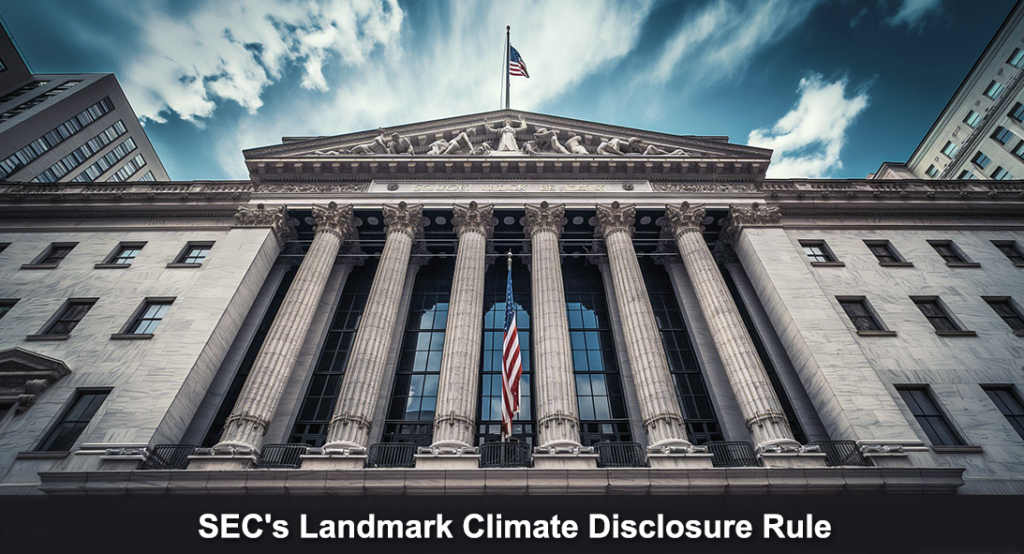
The SEC’s climate disclosure rule is a critical advancement in aligning corporate reporting with the realities of climate change. It aims to foster a more informed and proactive approach to managing climate risks in the corporate sector, potentially contributing to a more sustainable and resilient economy. However, its effectiveness will depend on the collective response of regulators, companies, investors, and other stakeholders amid ongoing legal, political, and practical challenges.

Training, Apprenticeships, and Mentoring for the Smart Building Industry. Resources for sourcing new talent.
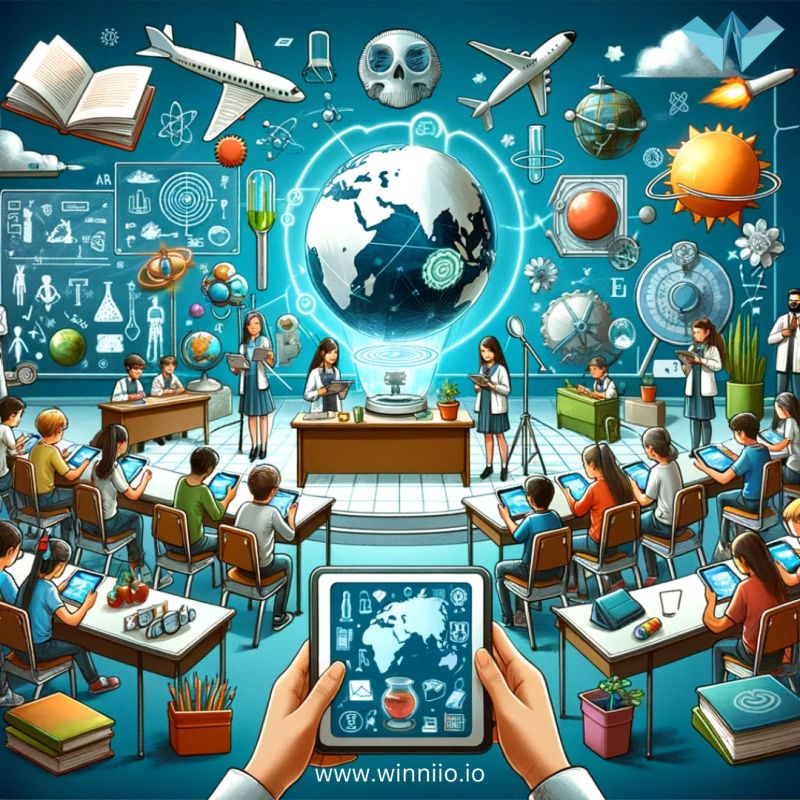
Step into the future of learning where Augmented Reality (AR) transforms education into an interactive and immersive experience. Discover how AR is making education more

Here are tips and tricks from the Staffing in the Industry Today from AHR Expo 2024. The panel of experts shares excellent tips on how
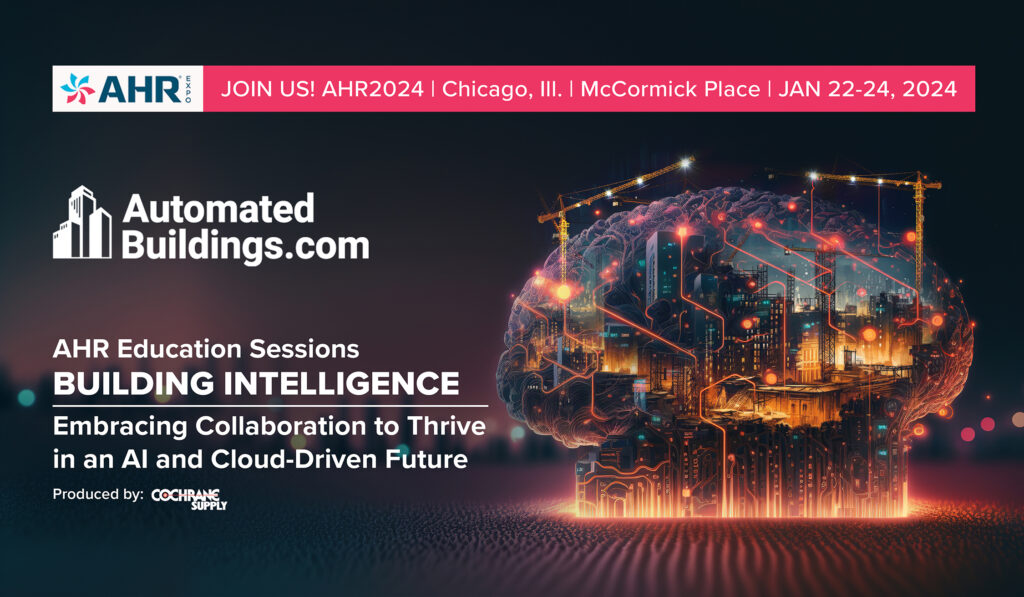
Building Intelligence: Embracing Collaboration to Thrive in an AI and Cloud-Driven Future The theme, “Building Intelligence: Embracing Collaboration to Thrive in an AI and Cloud-Driven
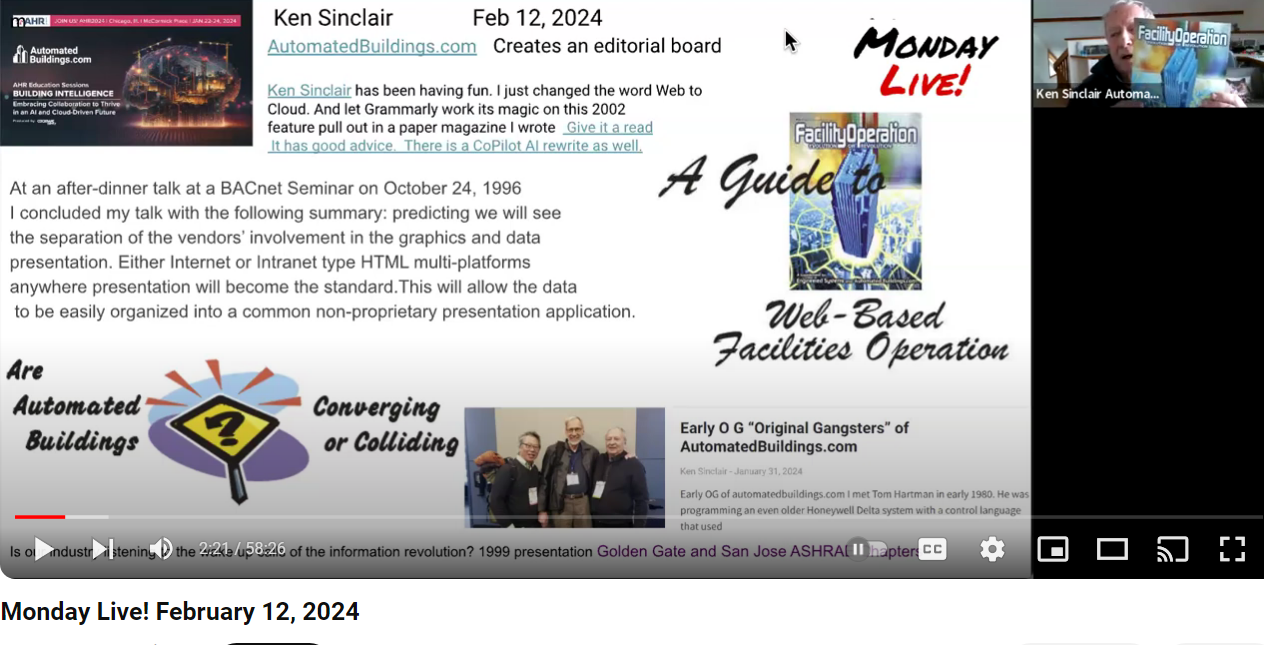
At an after-dinner talk at a BACnet Seminar on October 24, 1996, I concluded with the following summary: predicting we will see the separation of
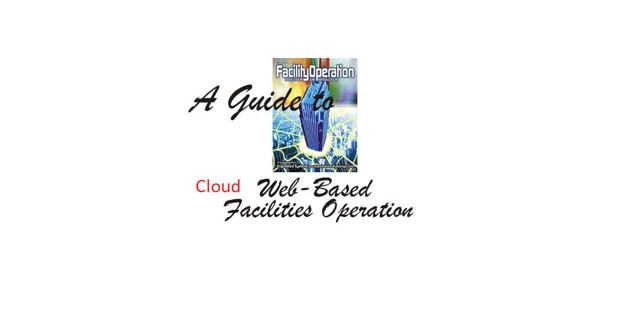
We are doing more with less by using Cloud-based anywhere information to amplify your existing building operational resources. The reality of today’s and tomorrow’s economies
A group of adults eager to switch careers or leave their low-wage gigs graduated from a unique job training program last month, ready to work
If you, like me, are having trouble understanding some of these new terms, here is a cheat sheet to help you catch up, with links
I start the discussion with this video clip below. Click on link below IoT will evolve quickly into Cloud Native and then evolve into AI
The SEC’s climate disclosure rule is a critical advancement in aligning corporate reporting with the realities of climate change. It aims to foster a more informed and proactive approach to managing climate risks in the corporate sector, potentially contributing to a more sustainable and resilient economy. However, its effectiveness will depend on the collective response of regulators, companies, investors, and other stakeholders amid ongoing legal, political, and practical challenges.
Training, Apprenticeships, and Mentoring for the Smart Building Industry. Resources for sourcing new talent.
Step into the future of learning where Augmented Reality (AR) transforms education into an interactive and immersive experience. Discover how AR is making education more
Here are tips and tricks from the Staffing in the Industry Today from AHR Expo 2024. The panel of experts shares excellent tips on how
Building Intelligence: Embracing Collaboration to Thrive in an AI and Cloud-Driven Future The theme, “Building Intelligence: Embracing Collaboration to Thrive in an AI and Cloud-Driven
At an after-dinner talk at a BACnet Seminar on October 24, 1996, I concluded with the following summary: predicting we will see the separation of
We are doing more with less by using Cloud-based anywhere information to amplify your existing building operational resources. The reality of today’s and tomorrow’s economies
A group of adults eager to switch careers or leave their low-wage gigs graduated from a unique job training program last month, ready to work